
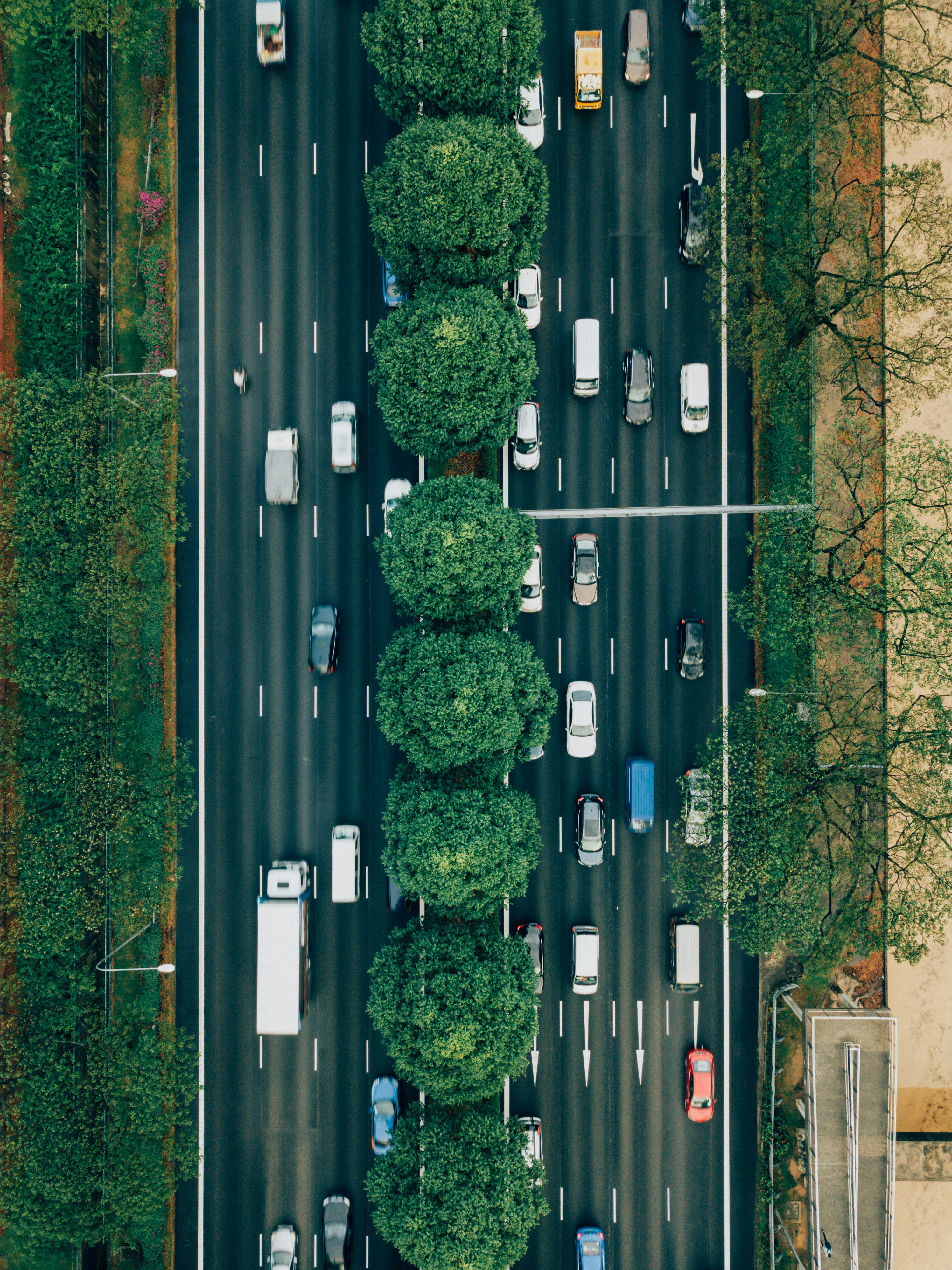
If you live on the South Shore and work in Montreal, your commute has one defining feature: the St. Lawrence River. Everything — your schedule, your budget, your stress level — depends on how you cross it. There are only a handful of ways over, they're all crowded, and one of the biggest is a construction site until 2027. So it's worth doing the math on each option, in dollars and in minutes.
The bridges: where almost half the traffic goes
The Samuel De Champlain Bridge carries roughly 130,000 vehicles a day, and the Jacques-Cartier about 90,000. According to La Presse, those two bridges alone handle 46% of all trips between the South Shore and Montreal. That concentration is why a single stalled car on either span can add half an hour to everyone's morning. The bridges are free to cross — the cost shows up in time, not tolls.
The La Fontaine tunnel: patience required until 2027
The Louis-Hippolyte-La Fontaine tunnel normally moves about 120,000 vehicles a day between the eastern South Shore and Montreal. But three of its six lanes have been closed since October 2022 for major renovation work. As CBC has reported, the completion date has slipped to late autumn 2026, with work continuing into 2027. If the tunnel is your route, congestion isn't a bad day — it's the baseline for at least another year.
Driving alone: the expensive default
Whichever crossing you pick, driving solo carries the same cost structure. Gas in Montreal is sitting around $1.95 a litre this summer, per the Régie de l'énergie's weekly readings. Downtown monthly parking typically runs $280 to $400 a month. Before you count insurance, maintenance, or depreciation, the parking spot alone can cost more than a transit pass — and you still spend your crossing creeping along with everyone else on the bridge.
The REM: fast, if it starts near you
The REM changed the equation for the central South Shore. Light-rail service from Brossard runs frequently into downtown, immune to bridge traffic, and it's covered by a regular ARTM transit pass. The catch is geography: the REM works brilliantly if you live near a station or can park at one, and not at all if your trip starts in Boucherville or Varennes. For many commuters, getting to the REM is its own small commute.
Bus and transit: $170 a month, schedule included
For South Shore commuters, crossing into Montreal by transit means a Zone AB pass, which costs $170 a month since the ARTM's July 1, 2026 fare increase of about 3%. That covers buses, the metro, and the REM. It's predictable money for a predictable trade: you don't drive, you don't park, but you live by the schedule — and buses that cross on the bridges sit in much of the same traffic cars do, reserved lanes aside.
Carpooling: the cheapest seat crossing the river
Here's the option most people skip over. The ARTM has run a free carpooling pilot, Covoiturage ARTM, since May 2023 — launched precisely to soften the La Fontaine tunnel closure. It pays drivers between $0.34 and $0.54 per kilometre for picking up passengers along their route, and the average passenger trip from Longueuil to downtown costs about $1.09. Read that again: about a dollar to cross the river, in a car that was making the trip anyway. Time-wise it's the same as driving — same bridge, same traffic — but the cost per person collapses, and every filled seat is one less car in the queue.
So which one wins?
It depends on where you start. Near a REM station, take the REM. On a good bus corridor with a $170 pass already in your budget, transit is honest value. If you must drive, you'll pay for it — in gas, in parking, and in bridge time that construction will keep inflating into 2027. But if your goal is the lowest cost per crossing, carpooling is hard to beat: the driver was going anyway, the seat was empty, and the numbers — a dollar and change per trip — reflect that.
That's the gap we're building Rydze for. It's a carpooling app — not ride-hailing — where drivers pick up riders along routes they're already driving, for a flat $3.75 a ride. We're pre-launch, and the South Shore commute, with tens of thousands of nearly-empty cars crossing the same bridges every morning, is exactly the kind of trip it's designed for.